What Is a Landing Page? Types, Best Practices, and How to Build One
A landing page is one of the most important tools in digital marketing. If you run any kind of online business, whether you are selling products, collecting leads, or promoting a service, landing pages are how you turn traffic into results.
This guide covers what landing pages are, the different types, what makes them effective, and how to build one that actually converts. If you are new to marketing or just want to sharpen your fundamentals, this will give you everything you need to know.
What Is a Landing Page?
A landing page is a standalone web page created for a specific marketing or advertising campaign. When someone clicks a link in an email, a social media ad, or a Google search result, the page they arrive on is the landing page.
The key difference between a landing page and a regular web page is focus. A homepage has navigation menus, multiple links, blog posts, and various calls to action. A landing page strips all of that away. It has one goal, one call to action (CTA), and everything on the page exists to drive the visitor toward that single action.
That single action might be:
- Signing up for a newsletter
- Downloading a free guide
- Purchasing a product
- Registering for a webinar
- Starting a free trial
By removing distractions and focusing the visitor's attention, landing pages consistently convert at higher rates than general web pages. This is why every serious marketer and business owner uses them.
Types of Landing Pages
There are four common types of landing pages, each designed for a different purpose:
Lead Generation Landing Pages
Lead generation pages (also called lead capture pages) collect visitor information like name, email address, phone number, or job title. The information goes to your sales team or email marketing platform so you can follow up and nurture the lead into a paying customer.
These pages typically offer something in exchange for the visitor's information -- a free guide, a discount code, or access to exclusive content.
Click-Through Landing Pages
Click-through pages warm up visitors before sending them to a sales or checkout page. They provide enough information and social proof to convince the visitor that the offer on the next page is worth their time.
E-commerce companies use these frequently. Instead of sending ad traffic directly to a product page, they send visitors to a click-through page that highlights benefits, shows reviews, and builds desire before the visitor clicks through to buy.
Squeeze Pages
A squeeze page is a stripped-down lead generation page focused specifically on collecting email addresses. They are typically short, with minimal text, a compelling headline, and a single form field (email address) in exchange for a lead magnet like an ebook, checklist, or webinar access.
Squeeze pages work well as the first step in a sales funnel, where capturing the email allows you to market to the prospect over time through automated email sequences.
Sales Pages
Sales pages are designed to sell a product or service directly. They tend to be longer than other landing page types because they need to address objections, build trust, present the offer, and close the sale -- all on a single page.
Effective sales pages include persuasive copy, customer testimonials, product demonstrations, pricing breakdowns, and a strong call to action. The 108 Proven Split Test Winners guide covers specific design elements that have been tested to increase sales page conversions.
Why Landing Pages Matter
Landing pages deliver measurable results that regular web pages cannot match:
Higher conversion rates. Landing pages convert visitors at significantly higher rates than homepages or blog posts because they eliminate distractions. When a visitor has only one option (take the desired action or leave), conversion rates go up.
Targeted messaging. You can create different landing pages for different audience segments, ad campaigns, or traffic sources. A Facebook ad targeting small business owners can lead to a landing page written specifically for small business owners, while a Google ad targeting agencies leads to a different page with different messaging.
Better data and insights. Landing pages make it easy to track exactly what is working. You know exactly how many people visited, how many converted, and which traffic source delivered them. That data lets you optimize your marketing spend.
Lower cost per acquisition. When your conversion rate increases, your cost to acquire each new lead or customer decreases. A landing page that converts at 20% instead of 5% means you need four times less traffic to hit the same revenue target.
Essential Components of a High-Converting Landing Page
The difference between a landing page that converts and one that does not usually comes down to these elements:
A Clear, Compelling Headline
The headline is the first thing visitors read. It needs to immediately communicate what the visitor will get and why they should care. Keep it specific and benefit-focused. "Get 50 Free Landing Page Templates" converts better than "Welcome to Our Website."
Benefit-Focused Copy
Write about what the visitor gains, not what your product does. Use simple language, short paragraphs, and bullet points. Address the specific problems your audience faces and explain how your offer solves them.
A Single, Strong Call to Action
Your landing page should have one CTA, not three. Every button, every link, every visual element should point toward the same action. If you want visitors to sign up, every element of the page should support that goal.
Use clear, action-oriented button text. "Start My Free Trial" outperforms "Submit." "Download the Guide" outperforms "Click Here."
Social Proof
Testimonials, customer reviews, case studies, logos of companies you have worked with, and trust badges all reduce friction. When visitors see that other people have taken the action and benefited from it, they are more likely to do the same.
Engaging Visuals
High-quality images, product screenshots, or short videos help visitors understand your offer quickly. A product demo video can convey more value in 60 seconds than 500 words of text.
Mobile Responsiveness
Over half of web traffic comes from mobile devices. If your landing page does not look and function well on a phone, you are losing conversions. Test your page on multiple devices and screen sizes before launching.
Fast Load Times
Every second of load time costs you conversions. Compress images, minimize scripts, and use a content delivery network (CDN) to ensure your page loads quickly. Tools like Google PageSpeed Insights can identify specific issues to fix.
How to Build a Landing Page That Converts
1. Define your audience and their problem. Get specific about who you are targeting and what you are solving for them.
2. Choose the right page type. Lead generation page for collecting contacts, sales page for selling, click-through page for warming up cold traffic.
3. Craft an irresistible offer. The perceived value must exceed what you ask for in return, whether that is an email address or a purchase.
4. Write benefit-focused copy. Lead with outcomes, address objections, use specific numbers, and keep paragraphs short.
5. Design for clarity. A clean layout outperforms a flashy one. Make the CTA button visually prominent and remove anything that does not support the conversion goal.
6. Test and optimize. A/B test headlines, images, CTA text, and page length. Small changes produce significant results. The 108 Proven Split Test Winners guide is an excellent reference for tested optimizations.
Landing Page Builders Worth Considering
You do not need a developer to build effective landing pages. Several platforms make it straightforward:
ClickFunnels
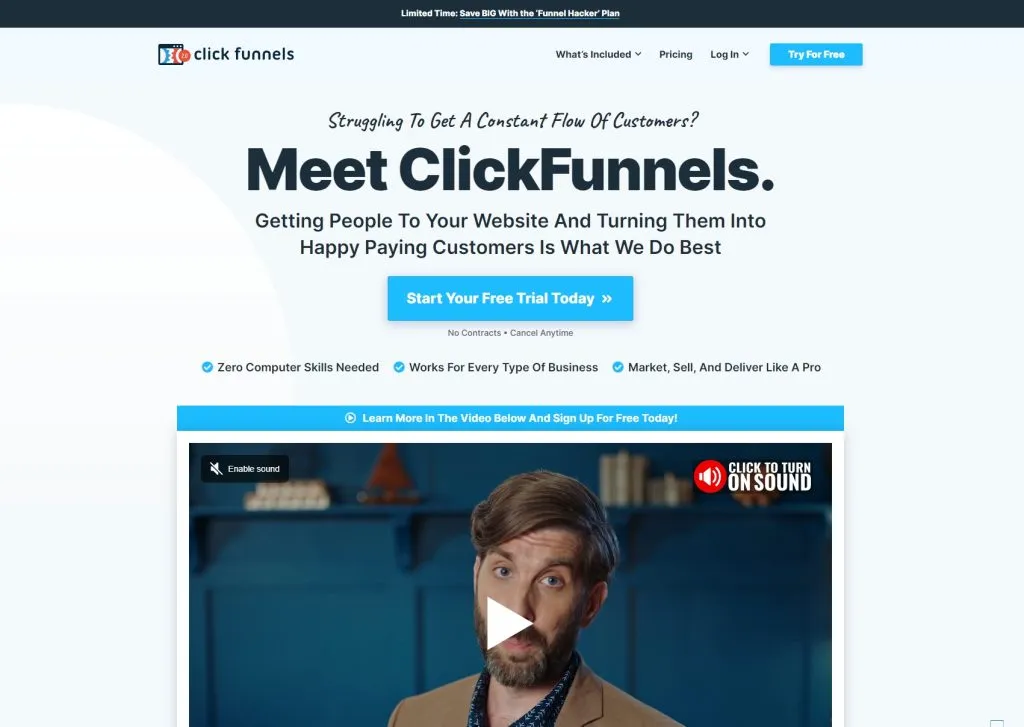
ClickFunnels goes beyond standalone landing pages. It lets you build complete sales funnels with landing pages, order forms, upsell pages, and email follow-up sequences all connected. It includes a library of pre-built funnel templates and a drag-and-drop editor. If you want to build landing pages as part of a larger marketing system, ClickFunnels is purpose-built for that. You can try it with a free trial here.
Unbounce
Unbounce is a dedicated landing page builder with a strong template library, drag-and-drop editor, A/B testing, and dynamic text replacement (which swaps headline text to match different ad keywords). It integrates with most major marketing tools.
Leadpages
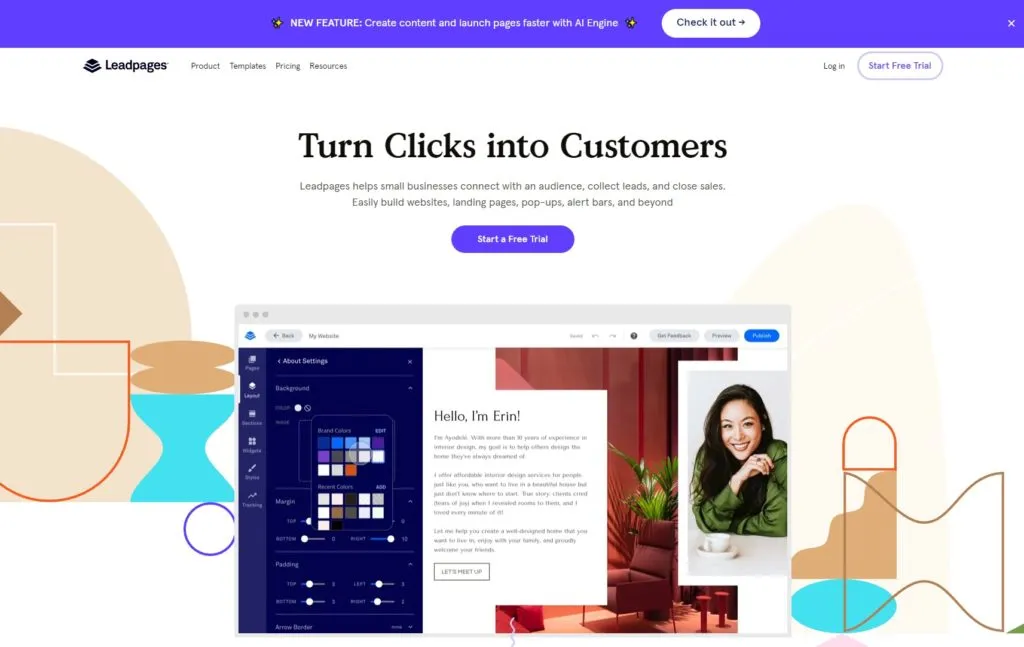
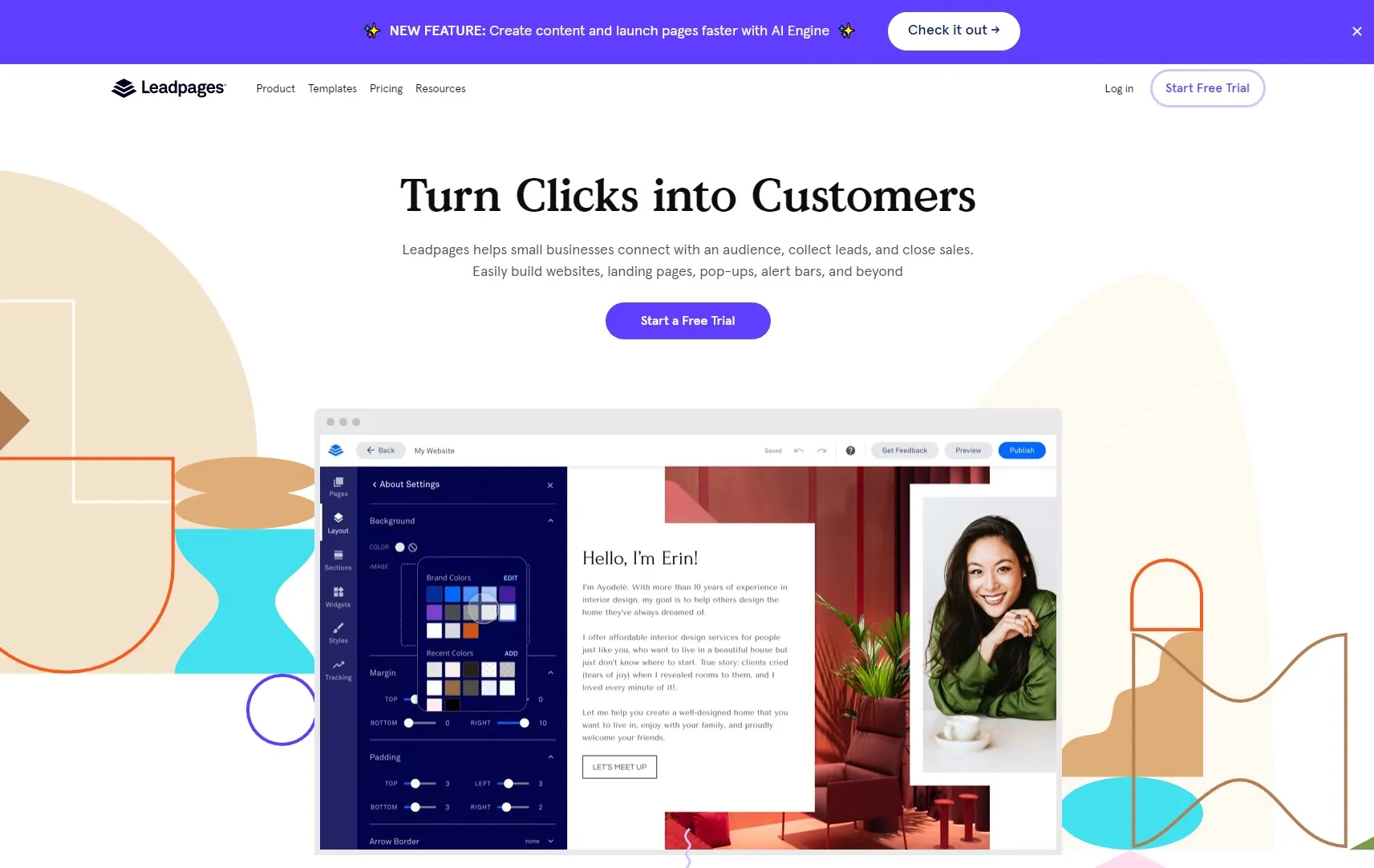
Leadpages is a user-friendly option with plenty of templates and built-in conversion tools like pop-ups and alert bars. It integrates with popular email marketing and CRM platforms and is priced competitively for small businesses.
Instapage
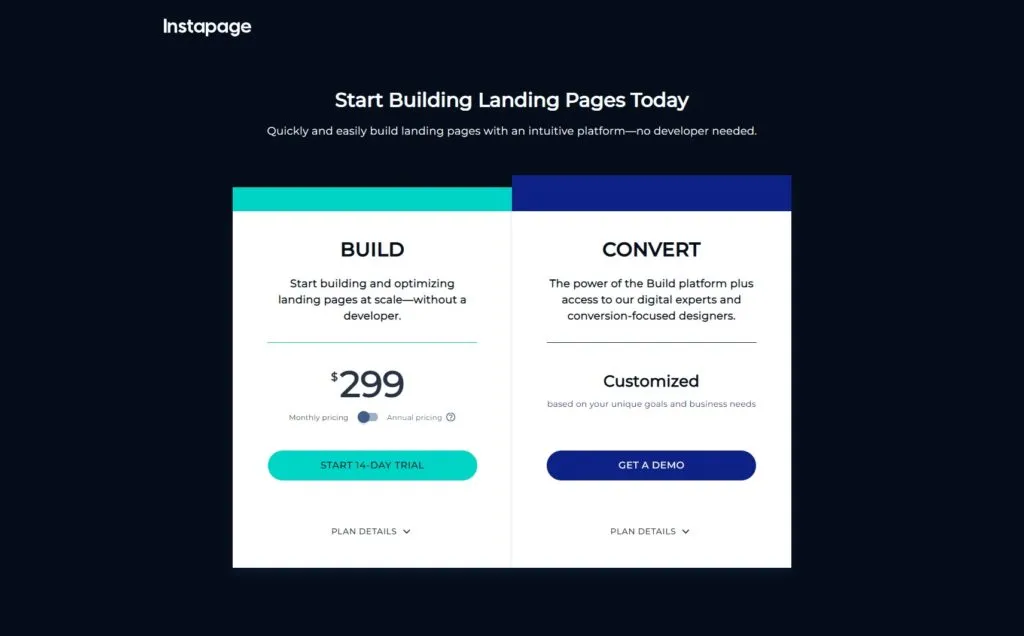
Instapage offers advanced features including heatmaps, detailed analytics, and collaboration tools for teams. Its A/B testing capabilities are robust, and it is a strong choice for companies running high-volume ad campaigns.
When choosing a tool, consider your specific needs. If you just need simple landing pages, Leadpages or Unbounce work well. If you want to build full marketing funnels with landing pages, upsells, and email automation all in one place, ClickFunnels is the more complete solution.
Using Landing Pages With Your Marketing Channels
Landing pages work best when paired with specific traffic sources. Send email subscribers to a dedicated landing page instead of your homepage. Run Facebook, Instagram, and LinkedIn ads that point to pages written specifically for each audience segment. For Google Ads, match your landing page content to your ad copy and keywords to improve Quality Score and lower cost per click.
You can also use landing pages in your content marketing by offering free resources (ebooks, templates, checklists) in exchange for contact information. This builds your email list while positioning your brand as an authority.
Measuring Landing Page Performance
Track four key metrics to optimize your landing pages over time:
- Conversion rate: The percentage of visitors who take the desired action. This is your primary success metric.
- Bounce rate: The percentage who leave without acting, which usually indicates a mismatch between the ad and the page.
- Time on page: How long visitors engage with your content before converting or leaving.
- Traffic source: Which channels deliver your highest-converting visitors, so you know where to focus your budget.
Conclusion
Landing pages are not optional in modern digital marketing. They are how you turn traffic into leads and leads into customers. A well-built landing page with a clear headline, focused copy, strong social proof, and a single call to action will outperform a generic web page every time.
Whether you build your landing pages with ClickFunnels, Unbounce, Leadpages, or Instapage, the principles are the same. Start with a clear goal, write for your specific audience, and test everything.